

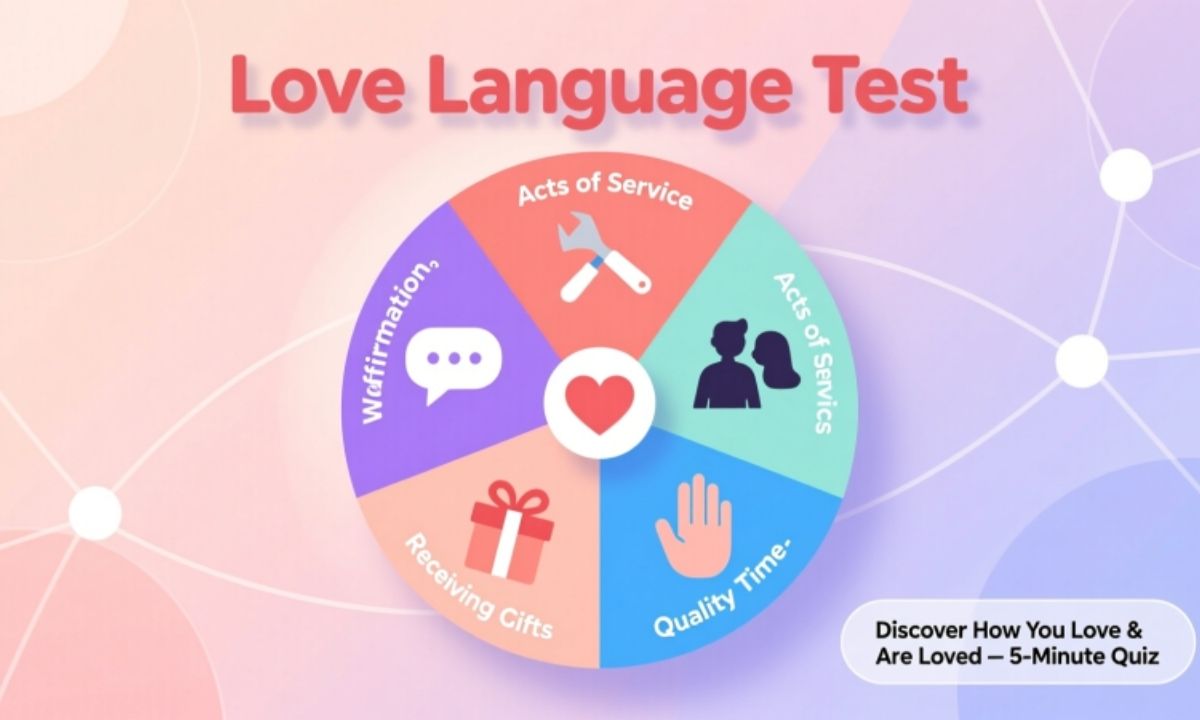
Ever wonder why your partner doesn’t seem excited about your gifts? Or why they crave more quality time together? You’re not alone. The way we express affection varies dramatically from person to person.
A love language test reveals how you naturally give and receive affection. This simple quiz changes how couples connect emotionally. Once you discover your primary style, relationships become easier and more fulfilling.
What Is a Love Language? Understanding Its Meaning
Dr. Gary Chapman introduced this concept in 1992. He’s a marriage counselor who noticed patterns in struggling relationships. Most conflicts stemmed from different ways of showing care.
A love language is your preferred method of emotional communication. Think of it as your heart’s native dialect. When someone speaks your language, you feel truly valued and understood.
Chapman identified five distinct styles through decades of counseling work. Each person has one dominant language and usually a secondary preference. Understanding yours prevents countless misunderstandings in romantic relationships.
The beauty lies in its simplicity. You’re not learning complex psychology here. Just recognizing how you naturally express feelings to those you cherish most.
Why Knowing Your Love Language Can Transform Your Relationship
Imagine speaking French to someone who only understands Spanish. That’s what happens when partners miss each other’s emotional signals. You’re both trying hard but not connecting effectively.
The 5 love language test free tools available online solve this problem. They create a shared vocabulary for discussing needs. Suddenly, you understand why certain gestures mean everything to your partner.
Research shows couples who know their languages report higher satisfaction. They argue less and feel more appreciated daily. It’s not magic—just better communication through mutual understanding.
Here’s what changes after taking the test:
| Benefit | Impact on Relationship |
| Better communication | Partners express needs clearly without guessing |
| Reduced conflict | Understanding replaces blame during disagreements |
| Increased intimacy | Emotional connection deepens through targeted efforts |
| Practical solutions | Specific actions replace vague relationship advice |
You stop wasting energy on gestures your partner doesn’t value. Instead, you invest in what truly makes them feel loved.
The 5 Main Love Languages Explained
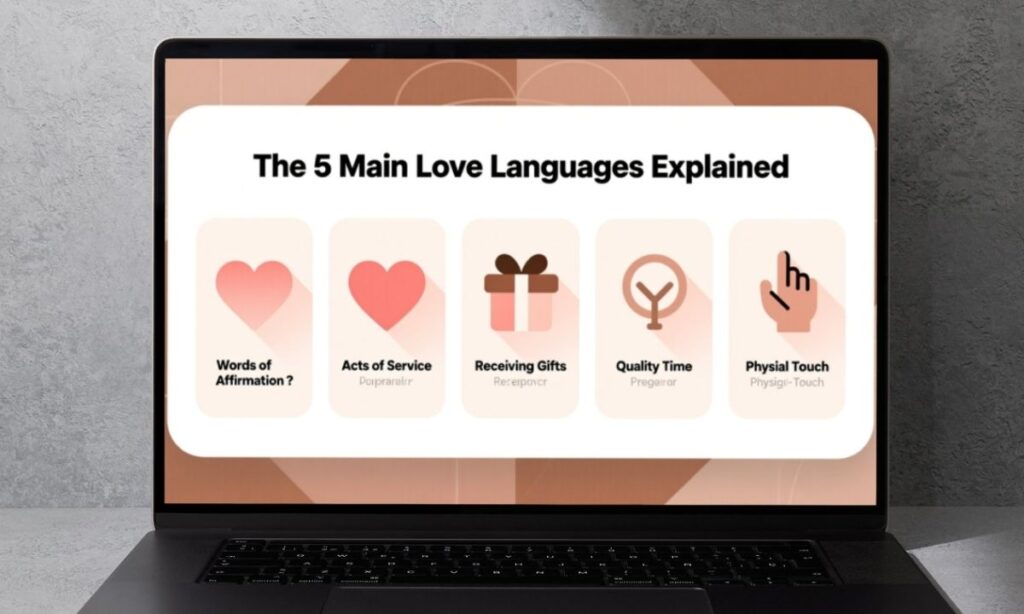
1. Words of Affirmation
Verbal appreciation fuels these individuals. Compliments aren’t just nice—they’re essential nourishment. “I’m proud of you” carries more weight than expensive jewelry.
They thrive on encouragement, praise, and kind messages. A thoughtful text during work hours brightens their entire day. Criticism cuts deeper for them than other types.
2. Acts of Service
Actions speak louder than any declaration for these partners. Doing the dishes without being asked shows profound love. They notice effort more than flowery speeches.
These people value reliability and follow-through intensely. Helping with their to-do list means more than roses. Breaking promises devastates them because actions represent true feelings.
3. Receiving Gifts
Thoughtful presents symbolize love and remembrance for them. It’s not materialism—it’s about the intention behind choosing something. A small, meaningful gift outweighs generic expensive items.
They remember anniversaries and special occasions religiously. Forgetting important dates feels like emotional neglect. The physical object serves as a tangible reminder of affection.
4. Quality Time
Undivided attention is their oxygen. Phone scrolling during conversations feels dismissive and hurtful. They want presence, not just physical proximity.
Shared experiences create their deepest bonds. A two-hour conversation beats any luxury vacation done distantly. Interruptions during their time feel like rejection.
5. Physical Touch
Appropriate physical connection creates security for them. Hand-holding, hugs, and closeness communicate safety. Distance even temporary auses anxiety and disconnection.
They initiate contact naturally and frequently. A hug after a rough day heals wounds words cannot. Physical withdrawal registers as emotional abandonment.
How to Take a Love Language Test Accurately in 2026
The best love language test platforms offer updated scenarios. Technology changed how we express affection since 1992. Modern versions include digital communication patterns.
Start with the official 5 love language test from the Five Love Languages website. It takes roughly 10 minutes to complete honestly. Choose answers based on actual preferences, not what sounds noble.
Here’s how to get accurate results:
Before Starting:
- Find a quiet space without distractions
- Answer for yourself, not your partner
- Consider past relationships, not just current ones
- Be honest even if answers seem selfish
During the Test:
- Read each question twice carefully
- Pick what you’d genuinely prefer receiving
- Don’t overthink or analyze too deeply
- Trust your gut instinct on choices
Many free platforms now offer the love language test yourself first option. This individual approach prevents partner influence. Take it separately, then compare results together later.
The 7 love language test versions exist but aren’t officially recognized. Stick with Chapman’s original five for reliable insights. Additional categories often confuse rather than clarify.
Love Language Test
The traditional love language test english version remains most researched. It asks 30 paired questions about preferences. You choose between two scenarios repeatedly.
Sample question format: “I prefer receiving a heartfelt note OR having my partner do a household chore.” Your pattern of choices reveals your primary language.
The love language test txt format exists for accessibility. Simpler language helps younger audiences understand questions. Content stays identical just phrasing changes slightly.
Free versions provide basic results immediately. The 5 love language test free result shows your top language. Premium versions offer detailed percentages and secondary preferences.
Taking the love language test free result quiz doesn’t require email signup. Many sites now respect privacy better. Your data stays private during the assessment.
Results typically show a ranking system:
| Language | Your Score | Interpretation |
| Physical Touch | 10 | Primary language |
| Quality Time | 8 | Secondary preference |
| Words of Affirmation | 5 | Moderate importance |
| Acts of Service | 4 | Lower priority |
| Receiving Gifts | 3 | Least important |
Signs Your Partner’s Love Language Is Different from Yours
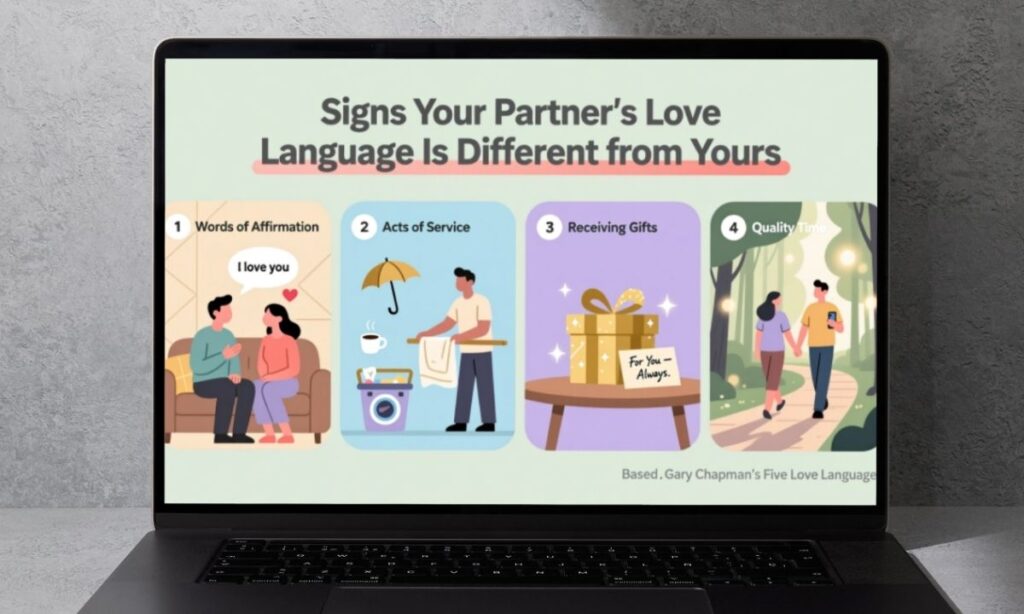
Notice when your efforts fall flat repeatedly. You’re buying gifts while they want conversation. This mismatch causes frustration on both sides.
Your partner seems ungrateful despite your best intentions. They’re not being difficult—you’re speaking different dialects. Recognition comes first, then adaptation.
Key indicators of language mismatch:
You feel exhausted giving without reciprocation. They complain about neglect despite your constant efforts. Both partners feel unappreciated simultaneously.
They light up at certain gestures you consider minor. Meanwhile, your grand romantic plans receive lukewarm responses. These patterns reveal language differences clearly.
Arguments often center around “not feeling loved enough.” You’re both trying hard but missing each other’s needs. The problem isn’t lack of love—it’s miscommunication.
How Love Language Test Helps Improve Emotional Connection
Understanding creates intentionality in daily interactions. You stop guessing what makes your partner happy. Specific knowledge replaces vague romantic notions.
The test provides actionable insights immediately. If your partner scores high on Acts of Service, start there. Cook dinner or handle their least favorite chore.
Emotional connection deepens when needs get met consistently. Your partner feels seen and understood at core levels. This security allows vulnerability to flourish naturally.
Conflicts decrease because expectations become realistic. You’re not demanding they change their natural expression style. Instead, both partners adapt to meet each other halfway.
Here’s the transformation process:
| Stage | What Happens | Relationship Impact |
| Discovery | Take test separately | Learn personal preferences |
| Sharing | Discuss results openly | Build mutual understanding |
| Experimentation | Try speaking partner’s language | Experience new connection |
| Consistency | Make daily efforts | Create lasting habits |
| Reassessment | Retest annually | Adapt to growth |
Long-term couples report renewed passion after applying insights. It’s like dating again with a cheat sheet.
Common Mistakes People Make About Love Languages
Assuming your language is universal ruins relationships. You give what you’d want to receive. This creates a frustrating cycle of unmet expectations.
Many people take the test once and forget results. Languages can shift during life transitions. Reassess after major changes like marriage or parenthood.
Frequent errors to avoid:
Forcing your partner to change their natural language. You can’t reprogram someone’s emotional wiring. Acceptance and adaptation work better than demanding transformation.
Using languages as weapons during arguments. “Well, Acts of Service is YOUR language!” This defeats the entire purpose. The framework should build understanding, not create scorecards.
Expecting perfection after one conversation about results. Changing habits takes consistent practice over months. Be patient as both partners learn new patterns.
Dismissing secondary languages completely. Most people need multiple forms of affection. Focus on the primary but don’t neglect others entirely.
Romantic Examples: Real-Life Stories of Love Language Impact

Sarah felt unloved despite Mike’s expensive gifts weekly. Her primary language was Quality Time. Once Mike understood, he scheduled phone-free dinners.
Their relationship transformed within weeks. Sarah finally felt prioritized and valued. Mike stopped wasting money on unwanted jewelry.
James constantly complimented Lisa, who seemed indifferent. Her language was Acts of Service. When James started helping with her business tasks, everything changed.
Lisa felt genuinely supported for the first time. James realized words meant little without backing them up. Their bond strengthened through practical partnership.
David initiated physical affection constantly with Emma. She felt smothered and withdrew further. Emma’s language was Words of Affirmation she needed verbal reassurance.
After taking the test together, David added compliments. Emma reciprocated his touch more willingly. Both felt more secure meeting each other’s needs.
These stories share common themes. Partners were trying hard but missing the mark. The love language test provided the missing translation guide.
How to Express Love According to Your Language
Once you know your partner’s primary language, take action. Small consistent efforts outweigh occasional grand gestures. Daily deposits into their emotional bank account compound interest.
For Words of Affirmation:
- Send appreciation texts during workdays
- Compliment specific actions, not just appearance
- Write notes for lunch boxes or mirrors
- Verbalize pride in their accomplishments
For Acts of Service:
- Handle their most dreaded chore without asking
- Anticipate needs before they voice them
- Complete projects you’ve been postponing
- Take tasks off their plate during stress
For Receiving Gifts:
- Remember important dates consistently
- Choose thoughtful items over expensive ones
- Bring small surprises randomly
- Keep a list of mentioned wants
For Quality Time:
- Schedule regular phone-free connection time
- Plan activities requiring full attention
- Listen actively without offering solutions
- Create meaningful rituals together
For Physical Touch:
- Initiate appropriate contact throughout the day
- Hold hands during walks or drives
- Offer hugs during emotional moments
- Maintain closeness during conversations
Remember, quality beats quantity in every language. One genuine effort outweighs ten half-hearted attempts.
Top Tips to Strengthen Your Relationship After the Test
Make the results a starting point, not the destination. Growth requires ongoing effort and adjustment. Relationships are dynamic so is emotional communication.
Schedule monthly check-ins about emotional needs. Ask if your efforts are hitting the mark. Adjust based on feedback without getting defensive.
Action steps for lasting change:
Create a shared reference document of each other’s languages. Include specific examples your partner loves. Refer to it when planning surprises or solving conflicts.
Celebrate small wins when you notice improvements. Acknowledge when your partner speaks your language successfully. Positive reinforcement encourages continued effort.
Be patient during the learning curve. You’ll forget sometimes or default to old patterns. Grace and humor help more than criticism.
Share your results with close friends if comfortable. They can support your growth and offer accountability. External perspective catches blind spots you might miss.
Revisit the test annually or after major life changes. Stress, parenthood, and career shifts alter priorities. What worked last year might need updating now.
Consider couples counseling if patterns don’t improve. Sometimes professional guidance accelerates understanding. A therapist can address deeper issues the test reveals.
FAQs
What is the most accurate love language test?
The official Five Love Languages assessment by Dr. Gary Chapman offers the most validated results based on decades of research.
How often should couples retake the love language test?
Experts recommend retaking annually or after major life transitions like marriage, parenthood, career changes, or relocation.
Can your love language change over time?
Yes, life experiences and personal growth can shift your primary language, though core preferences often remain relatively stable.
Do love languages work for non-romantic relationships?
Absolutely family members, friends, and colleagues all have emotional communication styles that benefit from this framework.
Is it bad if partners have completely different love languages?
Not at all differences create growth opportunities when both partners commit to learning and speaking each other’s languages intentionally.
How long does it take to see relationship improvements after the test?
Most couples notice positive changes within 2-4 weeks of consistently applying their new understanding to daily interactions.
Conclusion
The love language test isn’t just another relationship quiz. It’s a practical roadmap for deeper emotional connection. When you speak your partner’s dialect, everything becomes easier and more meaningful.
Take the test today separately first, then together. Discuss results openly without judgment or defensiveness. Start small with one new habit based on your partner’s primary language and watch your relationship transform naturally over time.

I’m Mack, a passionate blogger creating engaging, SEO-friendly articles that inspire, inform, and connect audiences worldwide.